We built a custom ERP for an operation no off-the-shelf ERP could handle.
At Ende's Car Wellness, a corporate car care company in the Netherlands, every vehicle is now tracked in one system from pick-up to invoice.
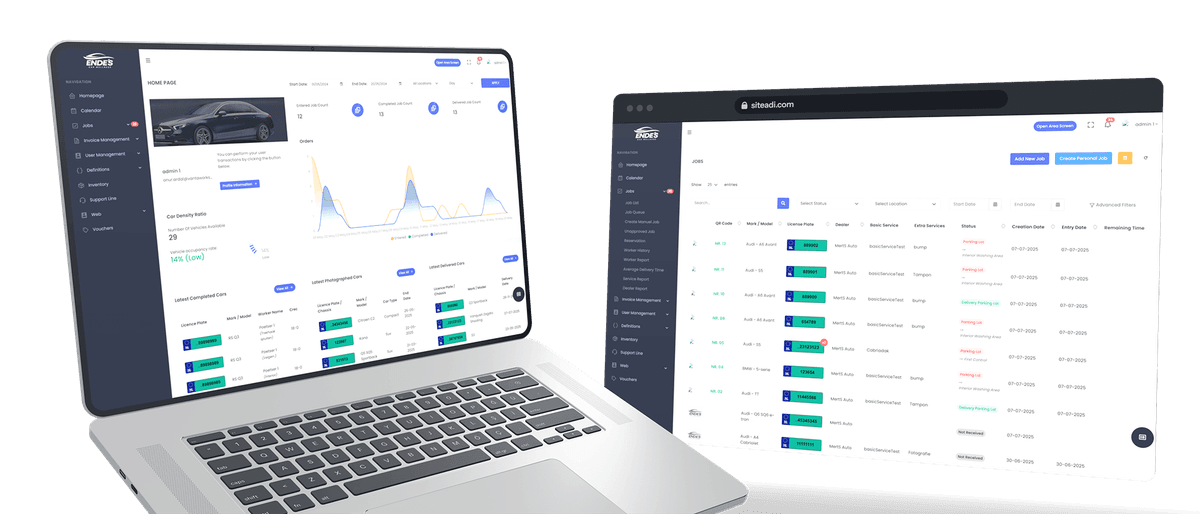
As the number of vehicles grew, so did the spreadsheets. Nobody could see in real time when a vehicle had arrived or which stage it was waiting at, and material use per job wasn't recorded. Who dropped off or collected a vehicle lived in messages and people's memory, and at month end the work was gathered from spreadsheets and turned into invoices by hand.
We started by looking at off-the-shelf ERP packages. At the facility, however, washing and repair run side by side on the same vehicle, and pick-up and delivery is a process in its own right. Vehicles are brought in and collected by different people from dealers, leasing companies and fleets, and every client has its own price list. None of the packages we reviewed handled this flow as it was; all of them would have required the team to change how it works. So we decided to build the software around the team's flow.
First, we mapped the real flow on site together with the team. A vehicle enters the system by its licence plate, existing damage is recorded with photos, and the planned work becomes a work order. Who did each job and how much material it used is logged on the work order, and stock is updated accordingly. The person who drops off or collects the vehicle is recorded with a timestamp.
Completed work is grouped per client and turned into an invoice with that client's own price list. Every step from pick-up to invoice has its own screen in the ERP, and everyone on the team sees which step a vehicle is at in the same place.
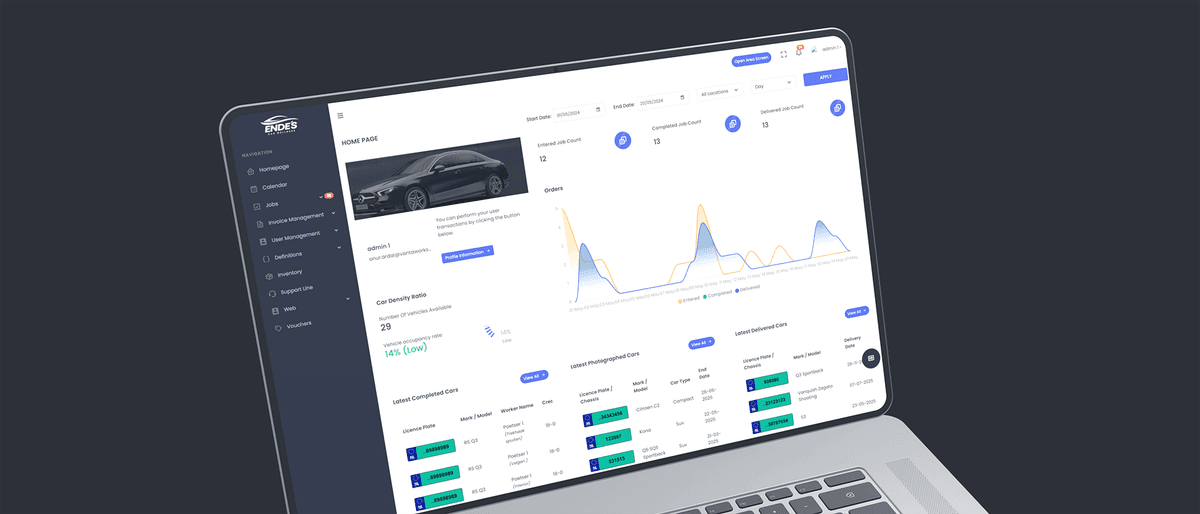
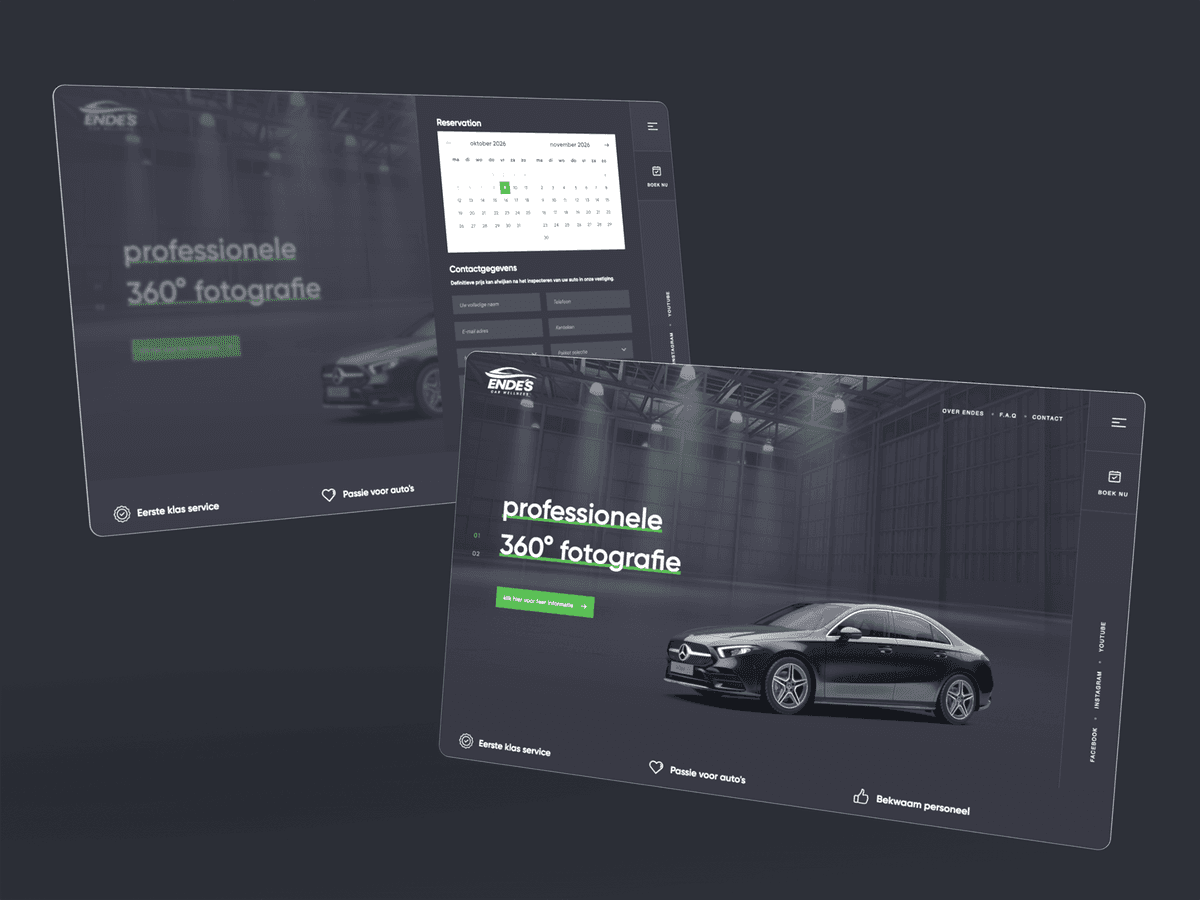
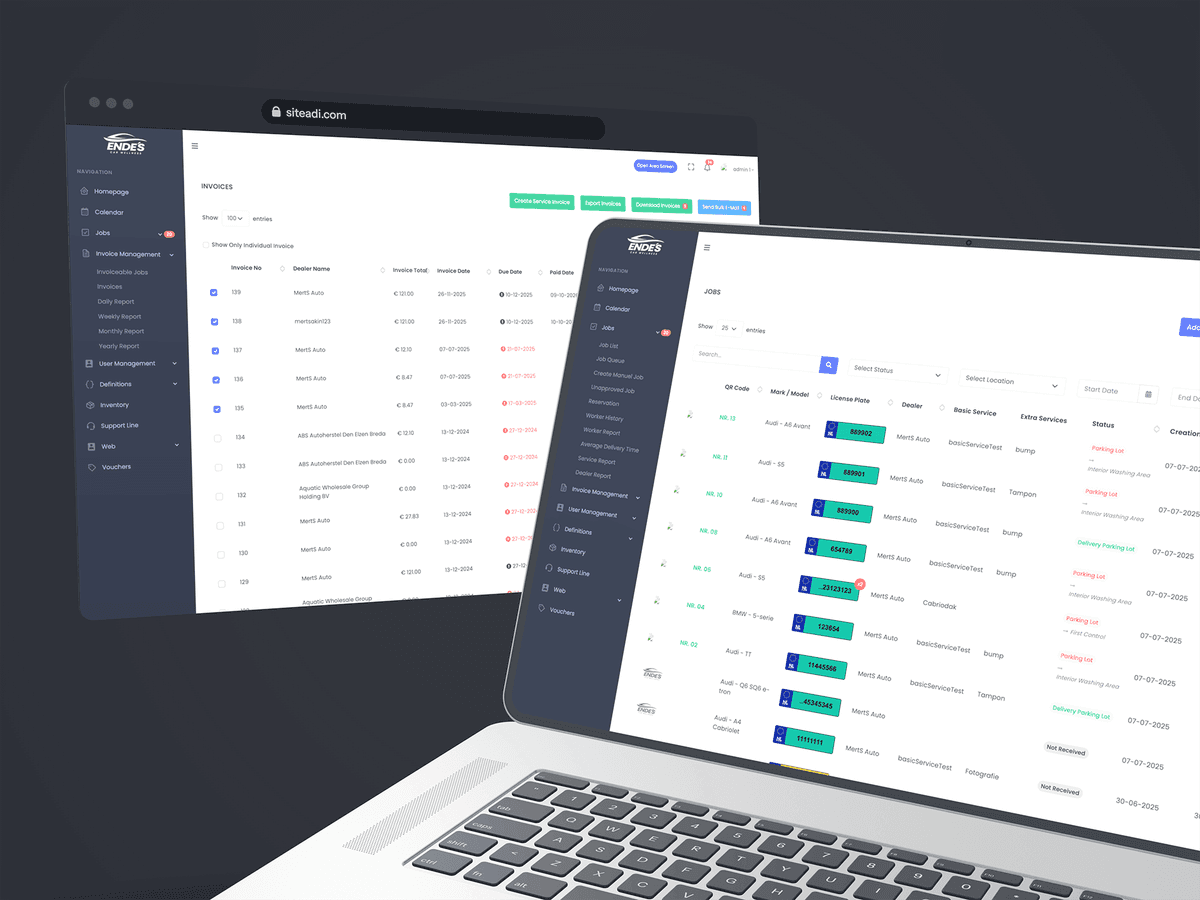
What changed in the move from Excel to ERP?
A public website that stays up even on the busiest day of scholarship applications.